Robotic Knee Replacement
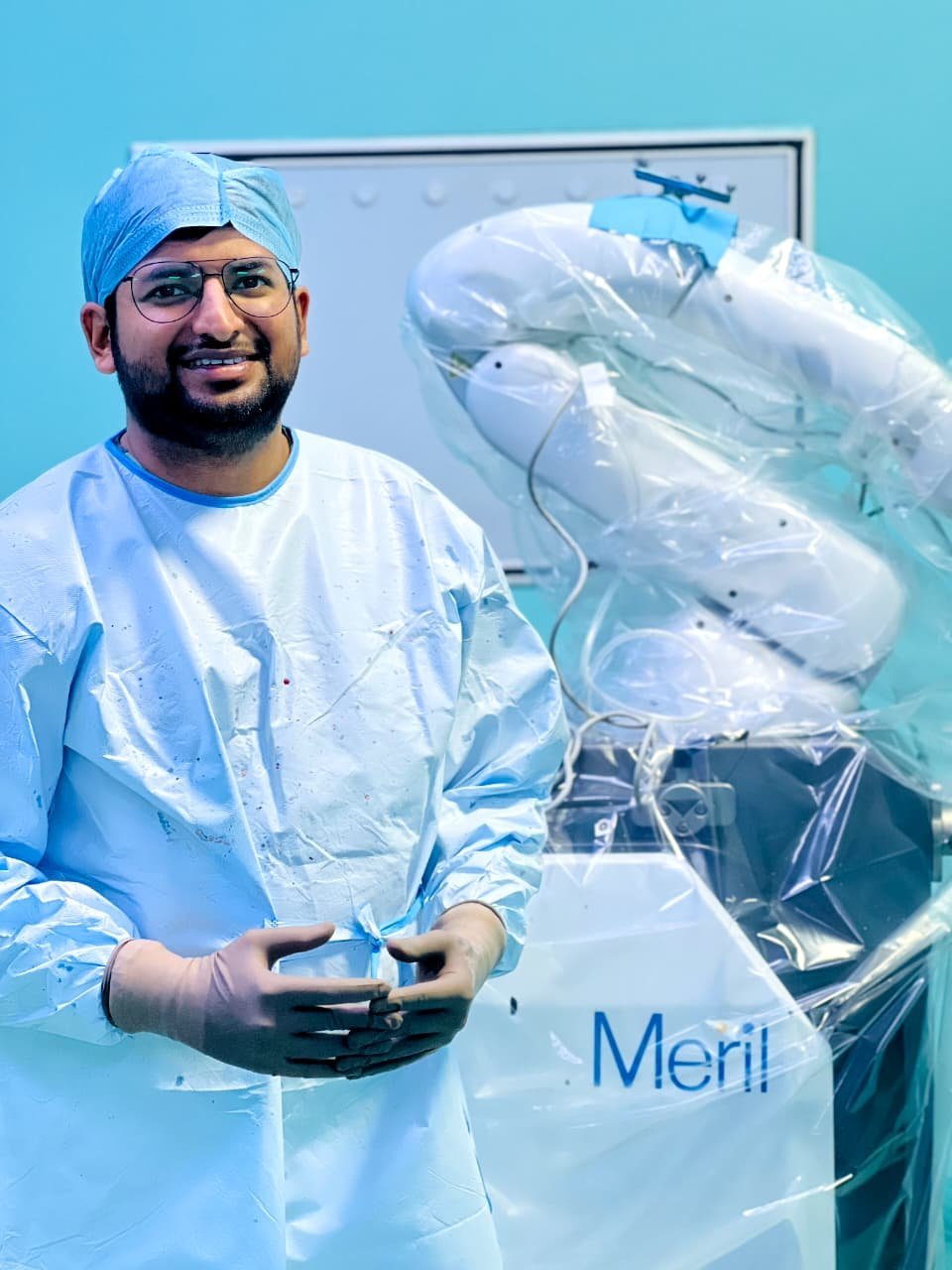
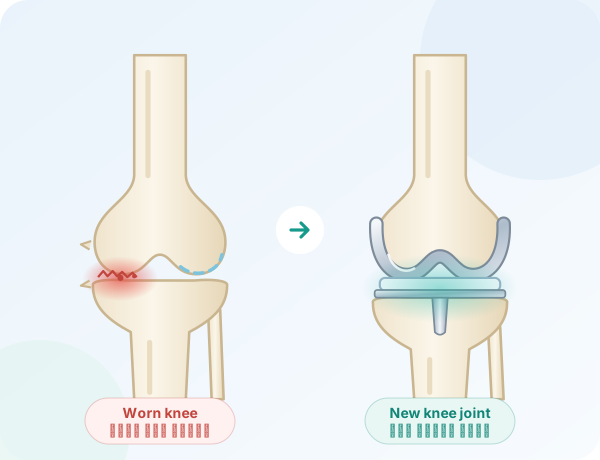
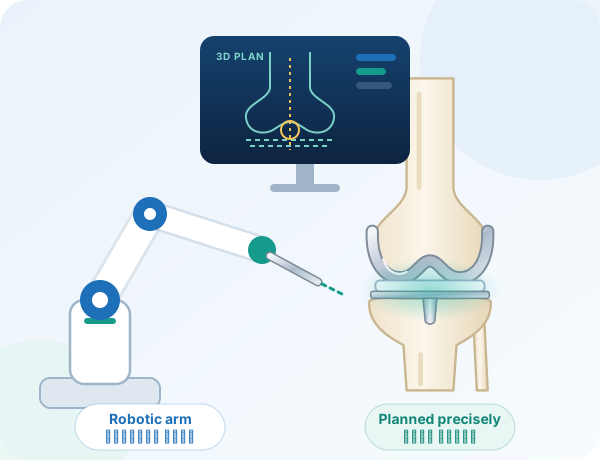
Robotic knee replacement (robotic-assisted total knee arthroplasty) uses a robotic system to support the surgeon in planning and performing a knee replacement. The surgeon makes every decision and performs the operation; the robotic system assists with planning and precision.
How robotic-assisted joint replacement works
- Pre-operative planningConsultation, examination and imaging to decide whether surgery — and robotic assistance — is appropriate.
- 3D assessmentThe joint is mapped to create a patient-specific 3D representation of the bones.
- Surgical planningThe surgeon plans implant size, position, alignment and bone cuts.
- Robotic-assisted precisionThe system helps execute the plan within defined boundaries, with the surgeon in control.
- Implant positioningComponents are positioned to plan; movement and stability are checked.
- RehabilitationA structured, individualised recovery programme follows surgery.
Is robotic knee replacement suitable for everyone?
Not necessarily. Suitability depends on the pattern of arthritis, alignment, bone quality, overall health and personal goals. Robotic assistance is one of several approaches; it is not automatically better for every patient and does not guarantee a faster recovery or a particular result.
Training
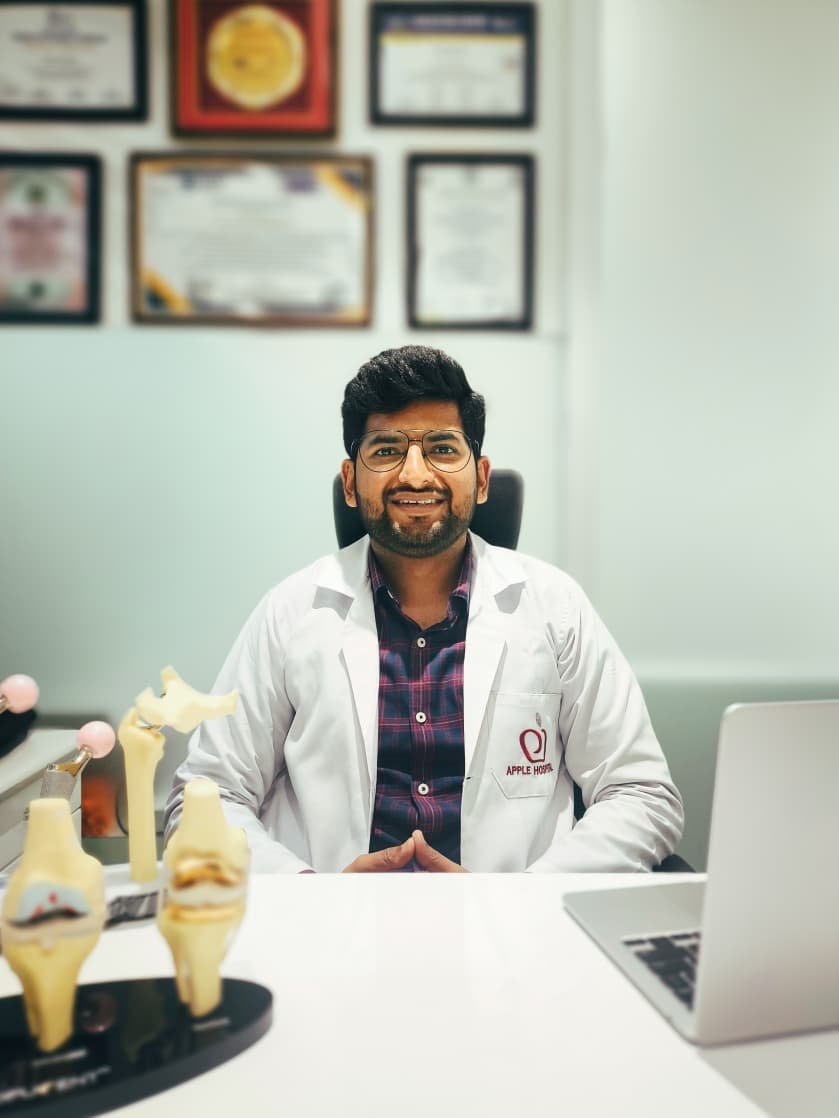
Dr. Pranay Khandelwal completed a fellowship in robotic, primary, complex and revision hip and knee replacement at Max Super Speciality Hospital, Patparganj, Delhi. See the robotic joint replacement guide (English & हिंदी).
Revision Joint Replacement
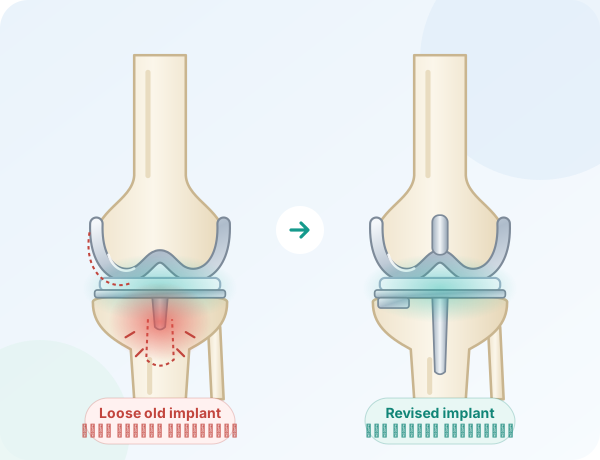
Revision joint replacement is surgery to address a previous knee or hip replacement that has worn, loosened, become unstable or developed another problem. It is usually more complex than the original operation and needs specialised planning.
Why might revision be needed?
- Wear of the implant’s bearing surfaces over time
- Loosening of the implant from the bone
- Instability or recurrent dislocation
- Infection around the implant
- A fracture around the implant
- Persistent pain or stiffness after the original surgery
Revision knee replacement
Revision knee surgery replaces or corrects some or all of the original knee components. Where bone has been lost, reconstruction may require specialised implants and careful planning.
Revision hip replacement
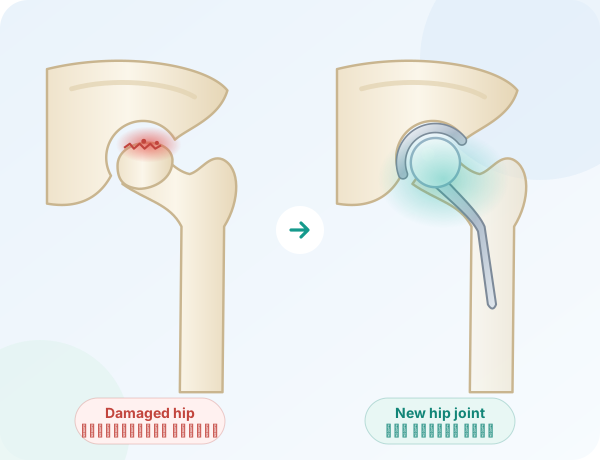
Revision hip surgery addresses problems with a previous hip replacement, such as loosening, wear or instability, and may involve replacing the socket, the stem or both.
Evaluation and planning
Assessment usually includes a detailed history, examination, imaging and — where needed — tests to understand why the original joint is causing problems before a plan is agreed.
Arthroscopy (Keyhole Joint Surgery)
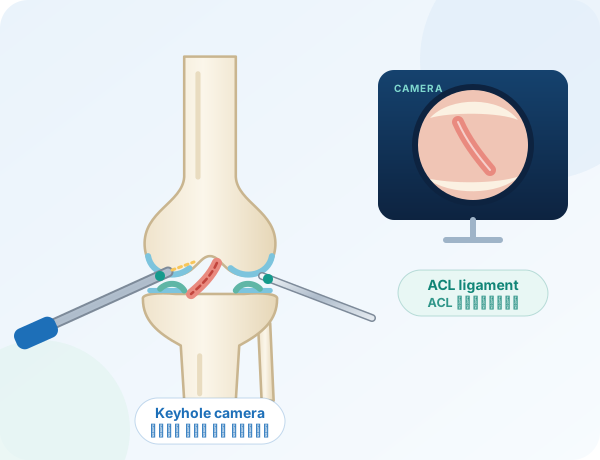
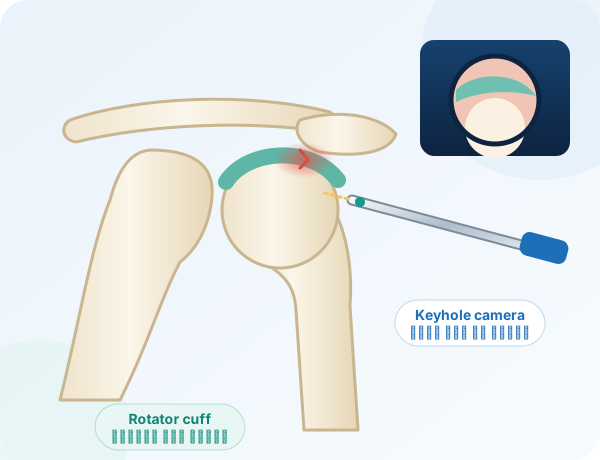
Arthroscopy is a minimally invasive technique in which a small camera and fine instruments are passed through small incisions to examine and treat problems inside a joint.
Knee arthroscopy
Used for selected ligament, meniscus and cartilage problems, including ACL and PCL reconstruction, meniscus repair and ACL/PCL avulsion fixation.
Shoulder arthroscopy
Used for rotator cuff repair, Bankart repair for recurrent dislocation, remplissage in selected cases, and subacromial decompression.
Recovery
Recovery depends on the procedure performed. Structured rehabilitation is an essential part of the result, and return to sport is planned in stages.
ACL & PCL Injuries
The anterior and posterior cruciate ligaments (ACL and PCL) cross inside the knee and control forward and backward movement of the shin bone. Injuries are common in sport and road traffic accidents.
ACL injury
Often caused by sudden stopping, twisting or awkward landing. Typical features include a ‘pop’, rapid swelling and a feeling that the knee gives way.
PCL injury
Frequently follows a direct blow to the front of the shin — such as a dashboard injury — or a fall onto a bent knee. It may cause pain at the back of the knee and a sense of looseness.
Associated meniscus injuries
Ligament injuries may be accompanied by meniscus tears, which can cause catching, locking or joint-line pain.
Treatment
Treatment ranges from structured physiotherapy and bracing to arthroscopic reconstruction or avulsion fixation. The choice depends on instability, activity level and associated injuries, and is decided individually after assessment.
Joint Degeneration & Arthritis
Joint degeneration is the gradual wear of the cartilage and structures of a joint. Over time it can progress to arthritis, causing pain, stiffness and reduced movement — most commonly in the knee and hip.
Common contributing factors
- Age-related wear
- Previous injury, fracture or meniscus damage
- Alignment problems and excess load on the joint
- Inflammatory joint conditions
Symptoms
Pain with activity, stiffness after rest, swelling, grinding and a gradual reduction in walking distance are typical.
Non-surgical management
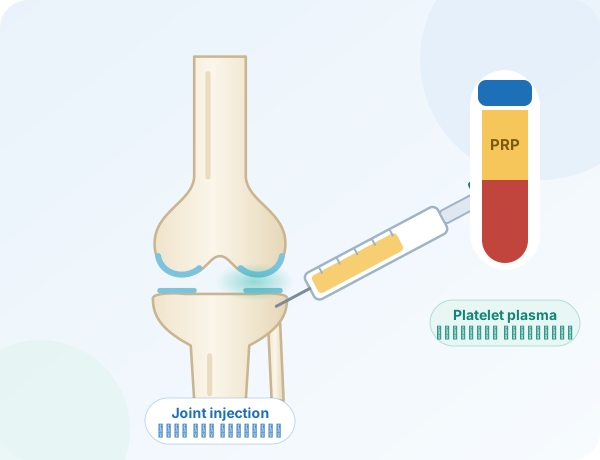
Exercise, physiotherapy, weight management, activity modification, medication and injections in selected cases can help many people.
When is joint replacement considered?
When advanced degeneration continues to cause significant pain and loss of function despite appropriate non-surgical care, knee or hip replacement may be discussed after clinical evaluation and imaging.
Orthopaedic Trauma & Fracture Care
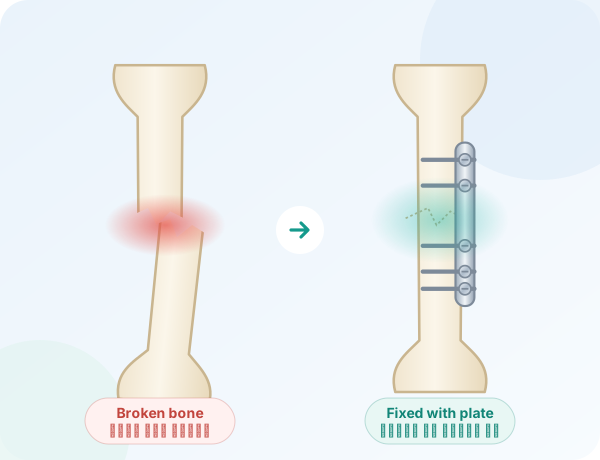
Orthopaedic trauma care covers the assessment and treatment of fractures, dislocations and complex injuries around joints — from initial management to surgery, wound care and rehabilitation.
Fractures
Fractures range from hairline cracks to complex breaks. Treatment may involve a cast or slab, or surgical fixation, depending on the bone and the fracture pattern.
Dislocations
A dislocation needs prompt, safe reduction and a check for associated fractures and nerve or blood-vessel injury.
Complex peri-articular injuries
Fractures that extend into or near a joint — around the knee, hip, ankle or elbow — often need detailed imaging and careful restoration of the joint surface.
After an injury
Seek prompt assessment for severe pain, deformity, inability to bear weight or move a limb, numbness, or an open wound. In an emergency, call 108 / 112.
Rehabilitation
Structured post-operative rehabilitation helps restore movement, strength and confidence.